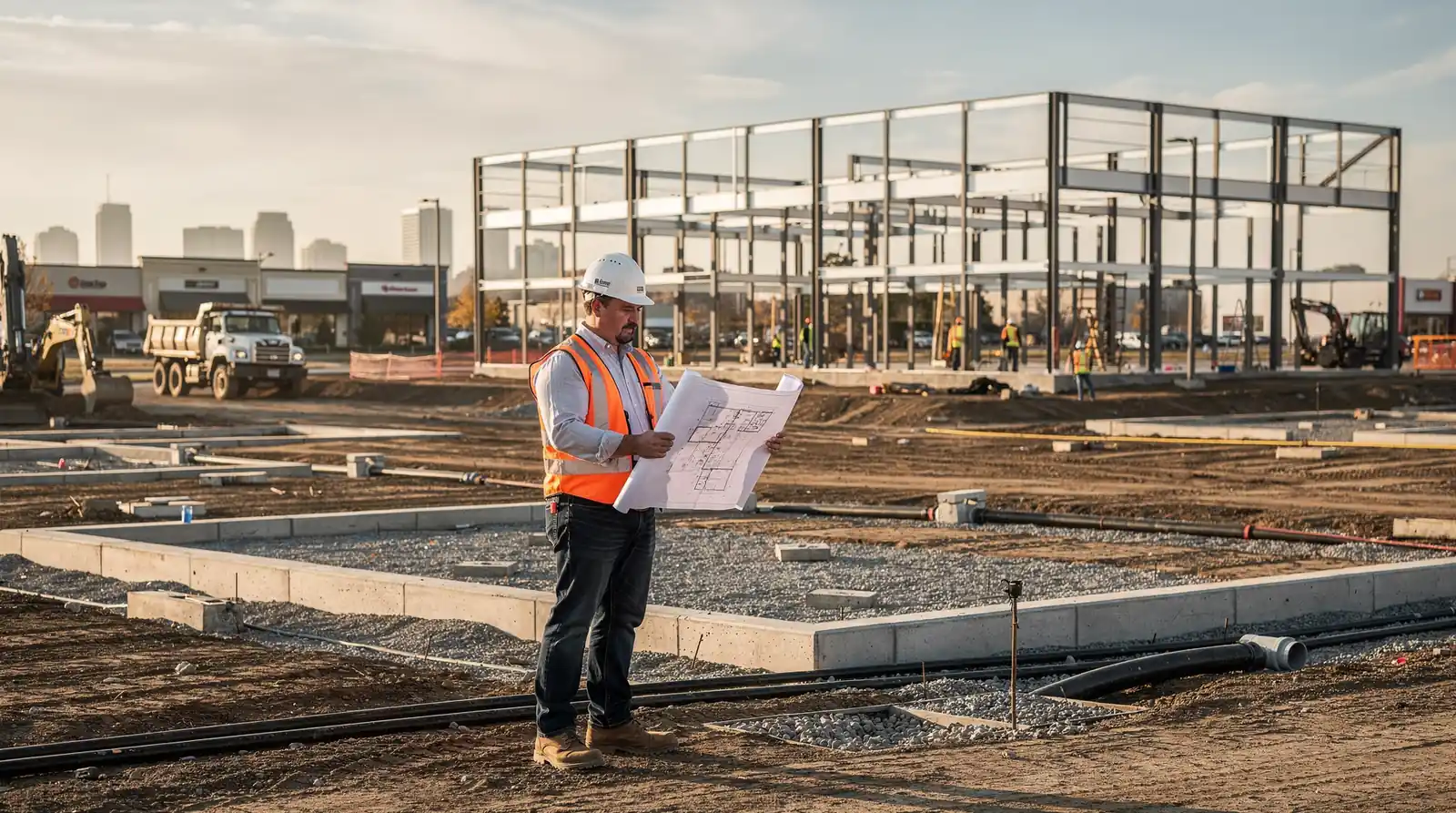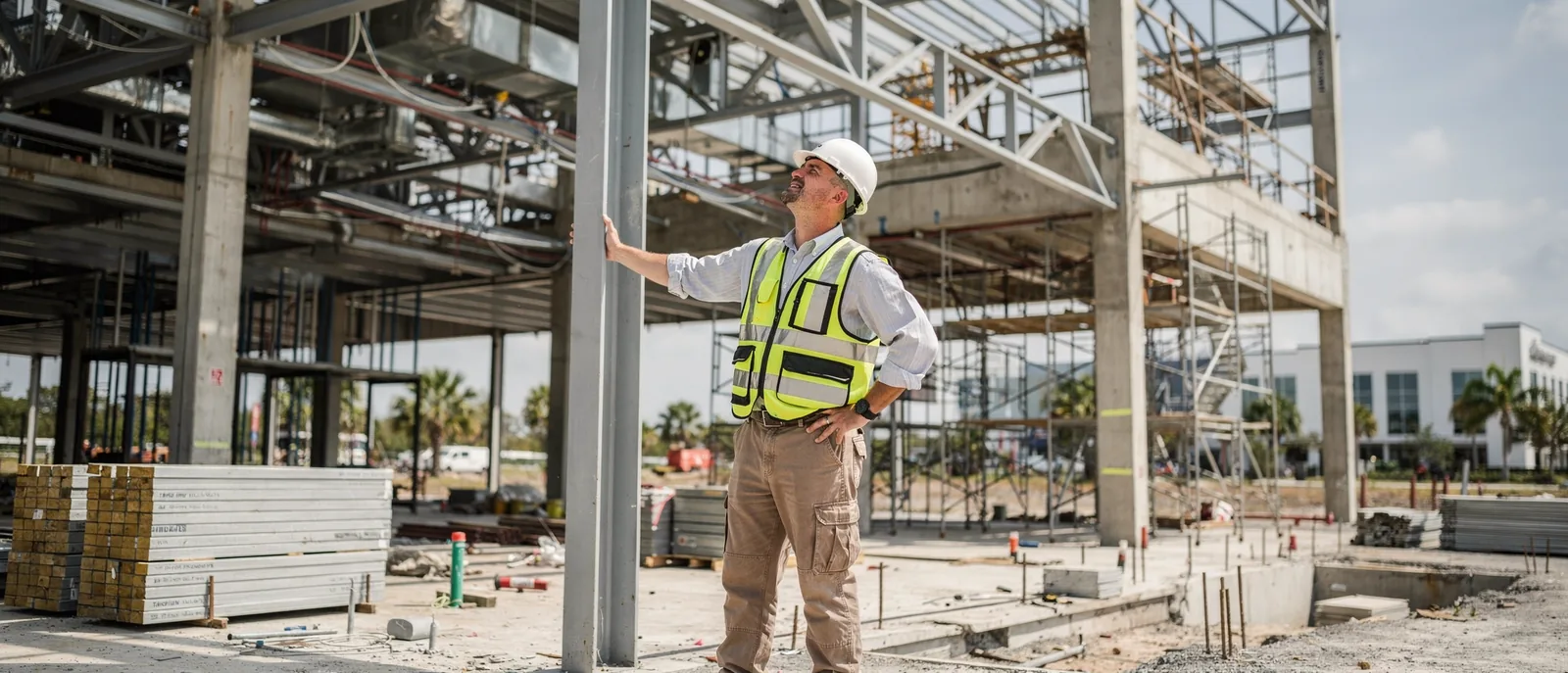
Commercial construction project management services coordinate contractors, engineers, architects, and financial institutions under one accountable team, ensuring communication and scheduling standards stay consistent from planning through completion. Ironrock Commercial Construction pairs this oversight with structural expertise, including concrete work and pre-engineered metal building construction, giving property owners and developers a single-source solution across Orlando, Winter Park, and surrounding commercial markets.
Key Takeaways
- Ironrock manages projects from design phase through erection, ensuring specialized continuity in pre-engineered structures.
- Over 30 years of experience delivering innovative, sustainable, and functional commercial building solutions across industries.
- Our team provides comprehensive services spanning pre-engineered metal building construction and expert concrete work.
- Ironrock commits to excellence, quality, and safety standards with hands-on project management from start to finish.
Why Does Project Management Make Or Break Builds?
Strong construction project management determines whether a commercial build finishes on budget or spirals into costly delays. Sound oversight drives efficiency across every phase, from initial planning through final completion, turning a complex build into a predictable process. Without that discipline, even well-funded projects stall.
Tight timelines and local regulatory compliance create the most common failure points on commercial job sites. Owners who understand these pressure points ahead of time position their projects for smoother execution. Skipping this preparation invites permit delays, rework, and budget overruns that surface months into construction.
What does a commercial project manager actually do?
A commercial project manager coordinates design, permitting, scheduling, and trade sequencing under one accountable structure. This role anchors construction scheduling decisions and keeps regulatory compliance on track throughout the build. Property owners gain a single point of contact rather than chasing updates across disconnected vendors.
Ironrock Commercial Construction applies this model by managing each project from design through erection, giving owners one accountable team instead of fragmented subcontractors. That structure reduces handoff errors and keeps decision-making centralized.
Dedicated project management teams also bring specialization across industries and building types, a standard many firms in the field now position as a core differentiator.
Effective general contractor project management typically includes:
- Upfront regulatory and permitting review
- Realistic scheduling built around trade sequencing
- Single-point accountability from design to completion
- Industry-specific specialization across project types
Owners researching how to manage a commercial construction project should treat planning discipline. Compliance review as the foundation, not an afterthought.

What Does A Commercial Project Manager Do?
A commercial project manager coordinates every phase of a build, from design through procurement to final erection. Property owners who skip this oversight often face mismatched timelines between architects, suppliers, and crews on site. Gaps like these drain budgets and stretch completion dates well past the original target.
Strong construction project management means treating a building as one continuous process, not a string of disconnected tasks. Ironrock Commercial Construction structures projects this way, with a single team carrying responsibility from initial design concepts through the final erection of steel and concrete. That continuity closes the communication gaps that stall lesser-managed projects and erode trust between owner and builder.
Who Does a Project Manager Answer To?
A project manager answers to everyone with a stake in the outcome: owners, engineers, architects, and financial institutions. Maintaining the highest standards of communication. Time management with each of these parties keeps a project moving forward without costly surprises. Skipping this level of coordination leaves financial institutions guessing about draw schedules and owners guessing about completion dates.
What Makes a Project Manager Reliable?
Reliability comes from character as much as credentials. A dependable construction partner operates with a self-motivated, professional mindset built on excellence, quality, and safety at every stage.
Commercial property owners and facility managers should expect their general contractor project management team to deliver on three fronts:
- Continuity: one accountable team from design to erection
- Communication: consistent updates across owners, engineers, and lenders
- Character: a safety-first, quality-driven standard on every job site
Property owners evaluating how to manage a commercial construction project should treat these three pillars as non-negotiable benchmarks before signing any contract.

How Does Scheduling Keep Your Project Moving?
Schedules translate a construction plan into a day-by-day roadmap that keeps crews, materials, and inspections aligned. Without that roadmap, small delays compound into missed deadlines and budget overruns. Strong construction scheduling gives property owners a clear line of sight into progress at every phase, from site prep to final walkthrough.
Two problems derail most timelines: unaddressed timeline pressure and gaps in regulatory compliance. A tight deadline forces hard choices about sequencing. A missed permit or inspection requirement stops work entirely until corrected. Ironrock Commercial Construction builds schedules that account for both pressures upfront, rather than reacting to them after they cause delays.
What Makes a Commercial Schedule Reliable?
A reliable schedule anticipates regulatory checkpoints instead of treating them as afterthoughts. It also builds in realistic sequencing for structural concrete, steel erection, and finish work, so one trade doesn’t wait idle for another. Effective construction project management means the plan flexes without collapsing when conditions shift.
Can One Team Manage Scheduling Across Multiple Projects?
Yes. Firms capable of stepping into a project at any stage help owners running several builds simultaneously stay on track. This flexibility matters for developers and facility managers juggling multiple sites. A commercial project manager who can pick up mid-project prevents one delayed build from stalling the others.
Owners evaluating a partner for general contractor project management should look for three scheduling capabilities:
- Sequencing that coordinates concrete, structural steel, and trade work without idle gaps
- Built-in tracking for permits and inspection milestones
- Flexibility to step into an existing project timeline without restarting planning from scratch
Turn-key delivery, on time and on budget, depends on this discipline. Understanding how to manage commercial construction project timelines starts with a schedule built to absorb pressure, not just track dates.
What Should You Look For In A Contractor?
Proven track records separate reliable contractors from risky bets. Markets experiencing active commercial growth depend on contractors who deliver durable, well-engineered facilities across a wide range of business types, from retail centers to industrial warehouses. Property owners and developers evaluating a general contractor project management partner should weigh experience, structural expertise, and communication practices before signing any agreement.
Concrete work deserves particular scrutiny. Concrete services form the structural foundation of nearly every commercial project. That foundation determines a building’s integrity for its entire service life. A contractor’s concrete expertise, not just its general building resume, often signals whether a project will hold up under decades of use.
Does the contractor offer structural engineering support?
Some construction questions go beyond routine building work and require specialized structural engineering and forensic assessment. These services protect buildings when structural concerns surface, whether during construction or years later. A contractor with access to this expertise, directly or through trusted partners, gives owners an added layer of protection.
What credentials actually matter?
Licensing, safety certifications, and documented project history matter more than sales promises. Owners should ask contractors to walk through past projects of similar scope and complexity.
Key evaluation points include:
- Demonstrated experience with durable, well-engineered commercial facilities
- Concrete expertise supported by a track record of structural reliability
- Access to structural engineering or forensic assessment resources when needed
- Transparent scheduling and clear project management communication
- Licensing and safety compliance appropriate to the project type
Ironrock Commercial Construction built its reputation on these standards, pairing concrete craftsmanship with disciplined project oversight. Owners who prioritize these factors reduce risk and protect their investment long after the ribbon-cutting ends.
How Do You Manage A Commercial Project?
Successful commercial project management blends structured planning with decades of field-tested judgment. Property owners and developers who skip this discipline risk delays, budget overruns, and buildings that fail to meet long-term operational needs. A qualified commercial project manager coordinates every phase, from site preparation through final walkthrough. Ownership groups avoid costly surprises mid-build.
Entering a new market or building type demands more than a checklist. It requires a blend of expert knowledge and practical, hands-on experience built over years of fieldwork. That combination is what separates firms capable of handling complex builds from those simply following blueprints.
A complete management approach does not treat new construction and renovation as separate disciplines. Both require the same rigor around construction project management, from scheduling to cost control. Property owners benefit most when one team handles:
- New builds and ground-up construction
- Renovation and retrofit projects
- Structured construction scheduling across trades
- Budget planning and cost oversight
- General contractor project management across subcontractors and vendors
What Does A Commercial Project Manager Actually Do?
A commercial project manager oversees timelines, budgets, and trade coordination from preconstruction through closeout. The role bridges design intent and field execution, keeping subcontractors aligned with the schedule. Without this coordination, owners absorb the cost of miscommunication through change orders and missed deadlines.
How To Manage A Commercial Construction Project Without Losing Control?
Control comes from a defined framework, not improvisation. Owners who understand how to manage a commercial construction project insist on documented budgets, phased scheduling, and clear accountability at every milestone. Ironrock Commercial Construction applies more than 30 years of experience to deliver innovative, sustainable, and functional spaces through exactly this kind of hands-on, quality-first approach, the same discipline that allows a construction partner to exceed ownership expectations rather than simply meet them.
FAQ
What does commercial construction project management include?
Project management coordinates contractors, engineers, architects, and financial institutions under one accountable team, maintaining consistent communication and scheduling from planning through completion. Ironrock pairs this oversight with structural expertise in concrete work and pre-engineered metal building construction.
Why does project management matter for commercial builds?
Strong oversight determines whether a build finishes on budget or spirals into delays, driving efficiency from initial planning through final completion. Without this discipline, tight timelines and regulatory compliance issues create costly failure points on job sites.
How does Ironrock manage commercial construction projects?
Ironrock manages each project from the design phase through erection, giving owners one accountable team instead of fragmented subcontractors. This structure reduces handoff errors and keeps decision-making centralized throughout the build.
Conclusion
In closing, effective commercial construction project management demands expertise, continuity, and an unwavering commitment to quality, precisely what Ironrock Commercial Construction delivers through our integrated approach. By managing your project from design through erection, we eliminate coordination gaps and ensure specialized oversight at every phase. Our three decades of experience in pre-engineered metal building construction. Comprehensive concrete services position us to transform your vision into a functional, sustainable space built to exacting standards. Partner with a team that prioritizes excellence and safety as foundational principles.