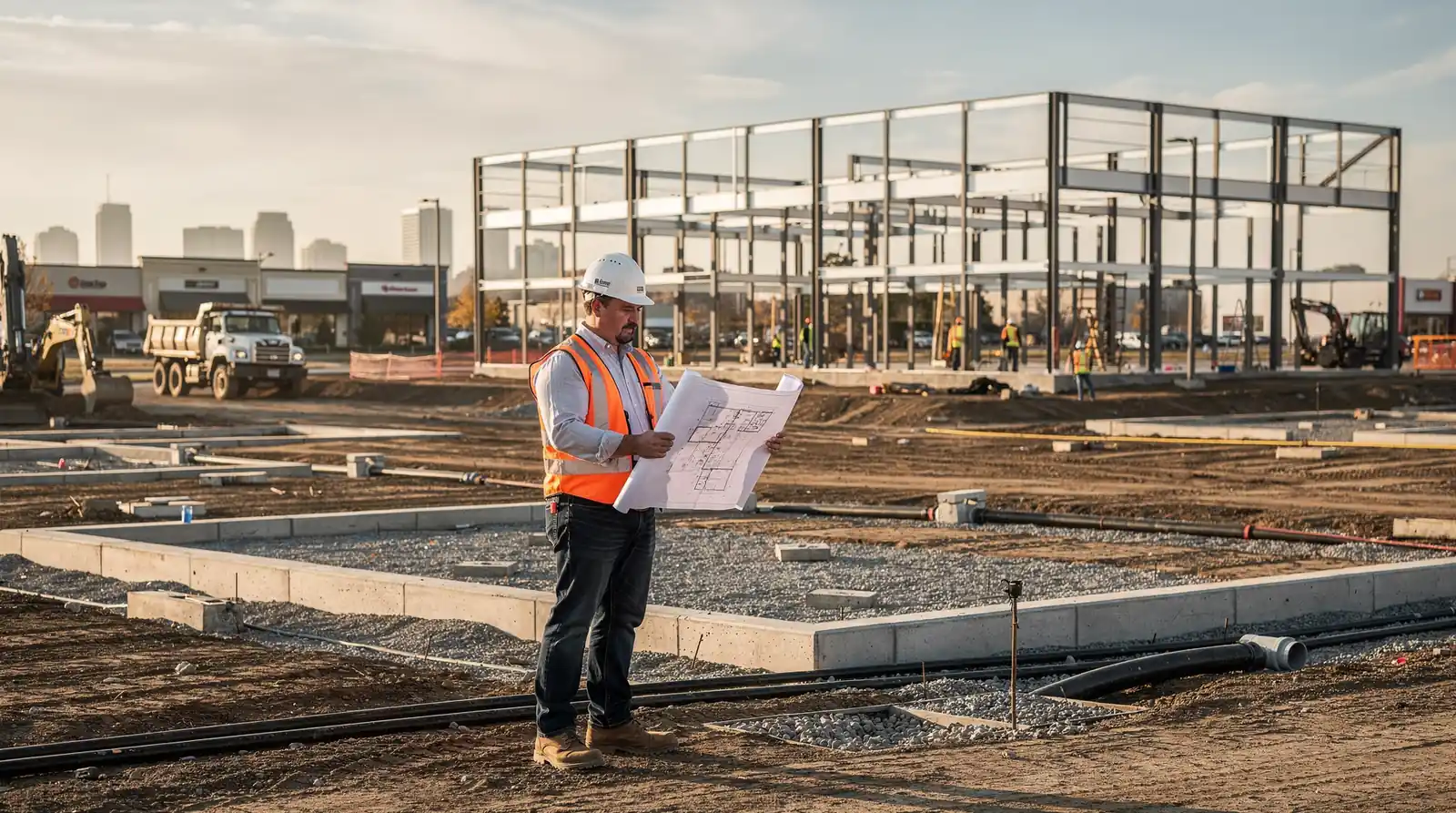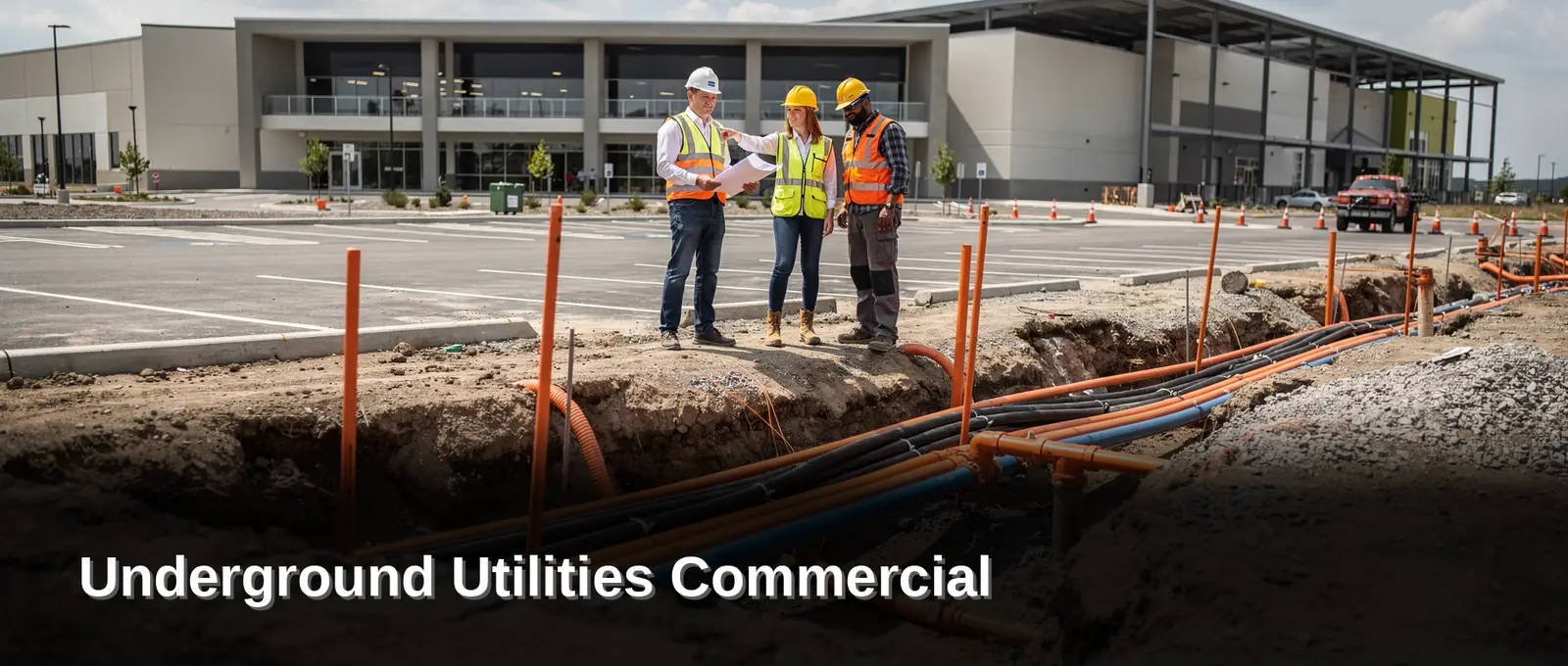
Commercial underground utilities and trenching services provide the critical infrastructure for water, sewer, electrical, and communication lines on any commercial site. Ironrock Commercial Construction coordinates these complex installations through vetted utility trenching subcontractors, bringing over 30 years of experience managing that work alongside its own foundations and concrete services to ensure durable, code-compliant systems that support long-term building performance and safety.
Key Takeaways
- Commercial underground utilities form the operational backbone of every commercial development.
- A single failure in the underground utility system halts operations, damages property, and creates liability exposure.
- Trench collapses remain a leading cause of construction fatalities, making shoring systems and daily inspections non-negotiable.
- Proper trenching requires careful planning, attention to depth and alignment, and experienced subcontractors working under coordinated oversight.
Why are underground utilities critical for commercial sites?
Underground utilities form the operational backbone of every commercial development. These buried networks deliver essential services that businesses cannot function without. A single failure in the system halts operations, damages property, and creates liability exposure that no developer can afford.
The infrastructure encompasses five core systems. Water sewer tie-ins connect the building to municipal supply and waste removal. Electrical conduits power every light, machine, and HVAC component. Storm drainage networks prevent flooding and foundation damage. Communication lines carry data, voice, and security signals. Natural gas pipelines fuel heating systems and commercial kitchens. Each system demands precise installation. The Blatt Group notes that properly installed trenches provide the foundation for safe and reliable utility connections across all these categories.
What makes underground utility work so dangerous?
The underground environment hides multiple hazards. Existing gas lines, energized electrical cables, and unstable soil conditions create risks that escalate without warning. John J Dougherty’s commercial excavation team emphasizes that the underground utilities infrastructure is complex and dangerous. Specialized excavation subcontractors bring the machinery, training, and safety protocols required to manage these conditions. Amateur trenching invites catastrophic outcomes.
How does utility planning affect project timelines?
Coordination with municipalities dictates the entire construction schedule. Permits, inspections, and right-of-way approvals must align before trenching begins. Delays in any approval cascade through every subsequent phase. Utility trenching contractors who understand local code requirements prevent these bottlenecks. Ironrock Commercial Construction coordinates these specialized trade partners alongside its foundations, steel structures, and concrete services, keeping utility installation synchronized with the broader build. Developers who treat underground work as an afterthought lose weeks to rework and failed inspections.
What do utility trenching contractors actually do?
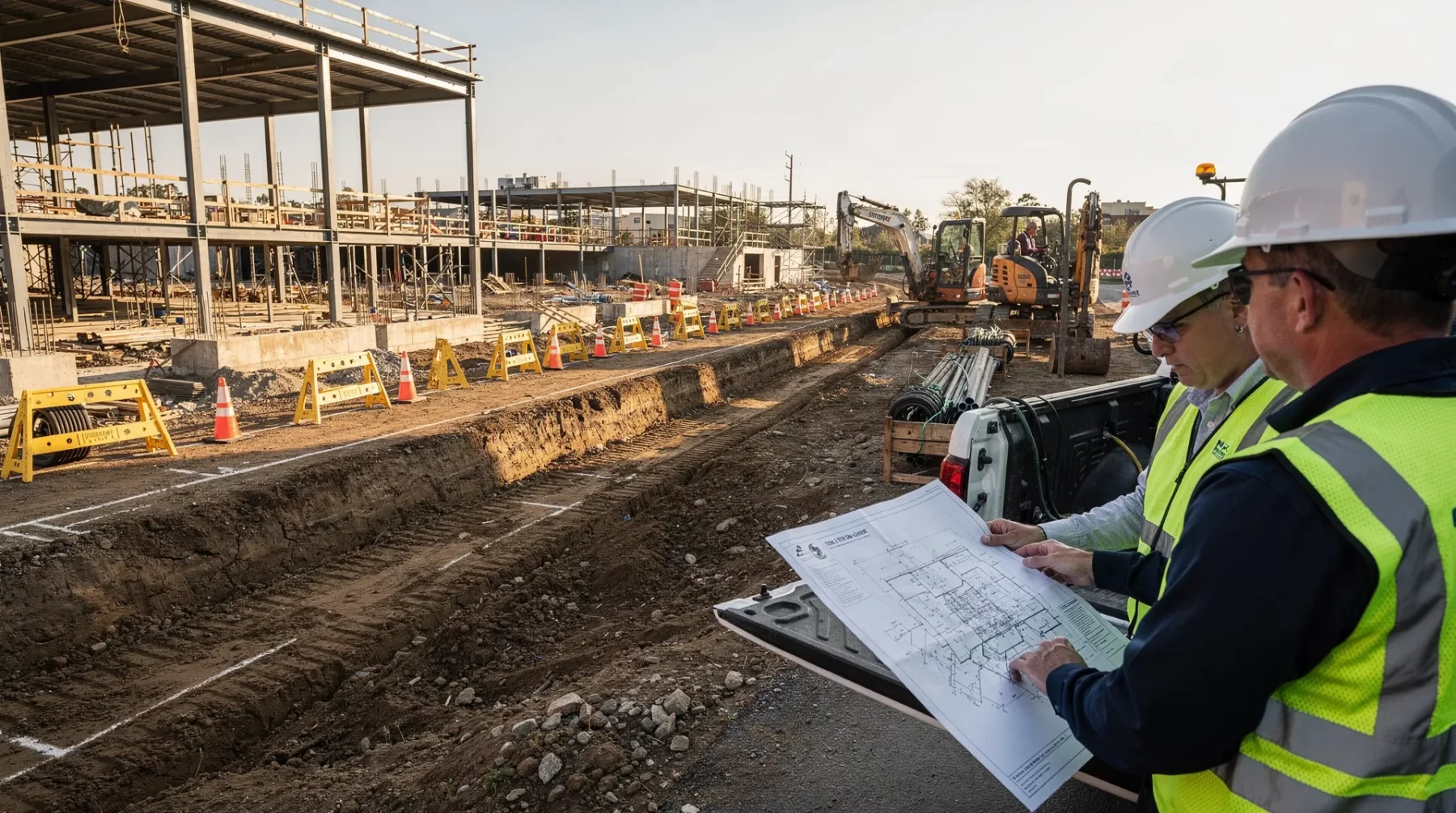
Utility trenching contractors install the underground infrastructure that powers every commercial building. These specialists handle electricity distribution, natural gas lines, telecommunication conduits, and water sewer tie-ins with precision and depth control. Without their expertise, a site remains disconnected from the services businesses depend on daily.
The work begins long before excavation equipment arrives. Proper trenching requires careful planning, attention to depth and alignment, and experienced operators who understand how underground systems impact the overall construction process. A single misaligned trench disrupts schedules and inflates budgets.
What systems do trenching contractors install?
Contractors manage four critical underground networks:
- Electrical conduits for power distribution from the grid to the building
- Natural gas lines requiring specialized safety protocols and pressure testing
- Telecommunication infrastructure including fiber optic and copper pathways
- Water and sewer pipelines connecting to municipal mains through tie-ins
Each system demands different trench depths, bedding materials, and backfill methods. The general contractor coordinates these layers across trades so utilities never conflict underground.
How do contractors maintain safety during trenching?
Safety is not just a word; it is a culture. Professional trenching subcontractors prioritize safety and quality through ongoing trainings, stand-downs, and continued awareness programs. Ironrock Commercial Construction brings over 30 years of experience coordinating these specialized trade partners. The company delivers durable, code-compliant facilities where subcontracted underground work integrates seamlessly with the foundations and structural systems Ironrock builds directly. Developers avoid costly rework when excavation and building construction fall under coordinated oversight.
How do water sewer tie-ins affect project timelines?
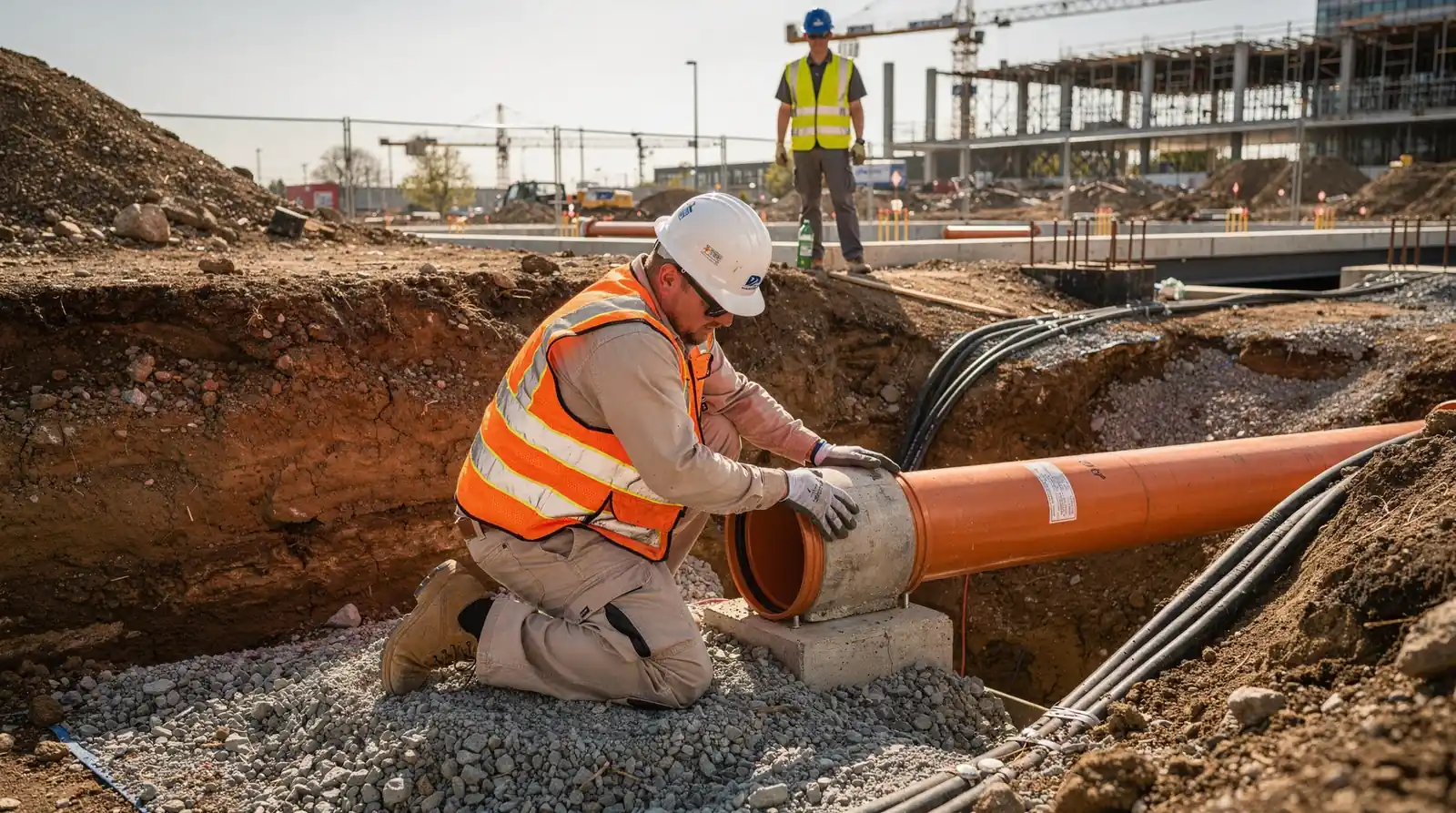
Water sewer tie-ins directly shape commercial construction schedules. These connections demand precise excavation, municipal approvals, and coordinated sequencing that ripple through every subsequent phase.
Utility trenching contractors must complete underground work before concrete pours begin. The Blatt Group notes that water and sewer lines, along with electrical systems and storm drainage, require properly installed trenches to provide safe and reliable utility connections. A single misaligned tie-in forces re-excavation. That delay cascades into foundation work, framing, and interior finishes.
What approvals are needed before water sewer tie-ins begin?
Coordination with municipalities drives the pre-construction timeline. Local authorities review tie-in plans for code compliance before issuing permits. John J Dougherty emphasizes that underground utilities infrastructure is complex and dangerous, demanding professional excavation with the right experience and machinery. Skipping this step risks stop-work orders and costly rework.
How does concrete work depend on utility completion?
Commercial concrete services form the structural backbone of any facility. Ironrock Commercial Construction manages each project from the design phase to erection, ensuring continuity across every stage. The company’s integrated approach means subcontracted utility trenching crews complete and backfill trenches, verified against the project schedule, before Ironrock’s own concrete crews arrive. This sequencing protects the structural integrity that enterprises depend on for the life of their buildings.
Project owners who treat water sewer tie-ins as a preliminary checkbox rather than a critical-path milestone encounter the steepest delays. Trenches left open too long invite weather damage and safety hazards. Proper planning and active coordination lock the schedule early and keep foundation work on track.
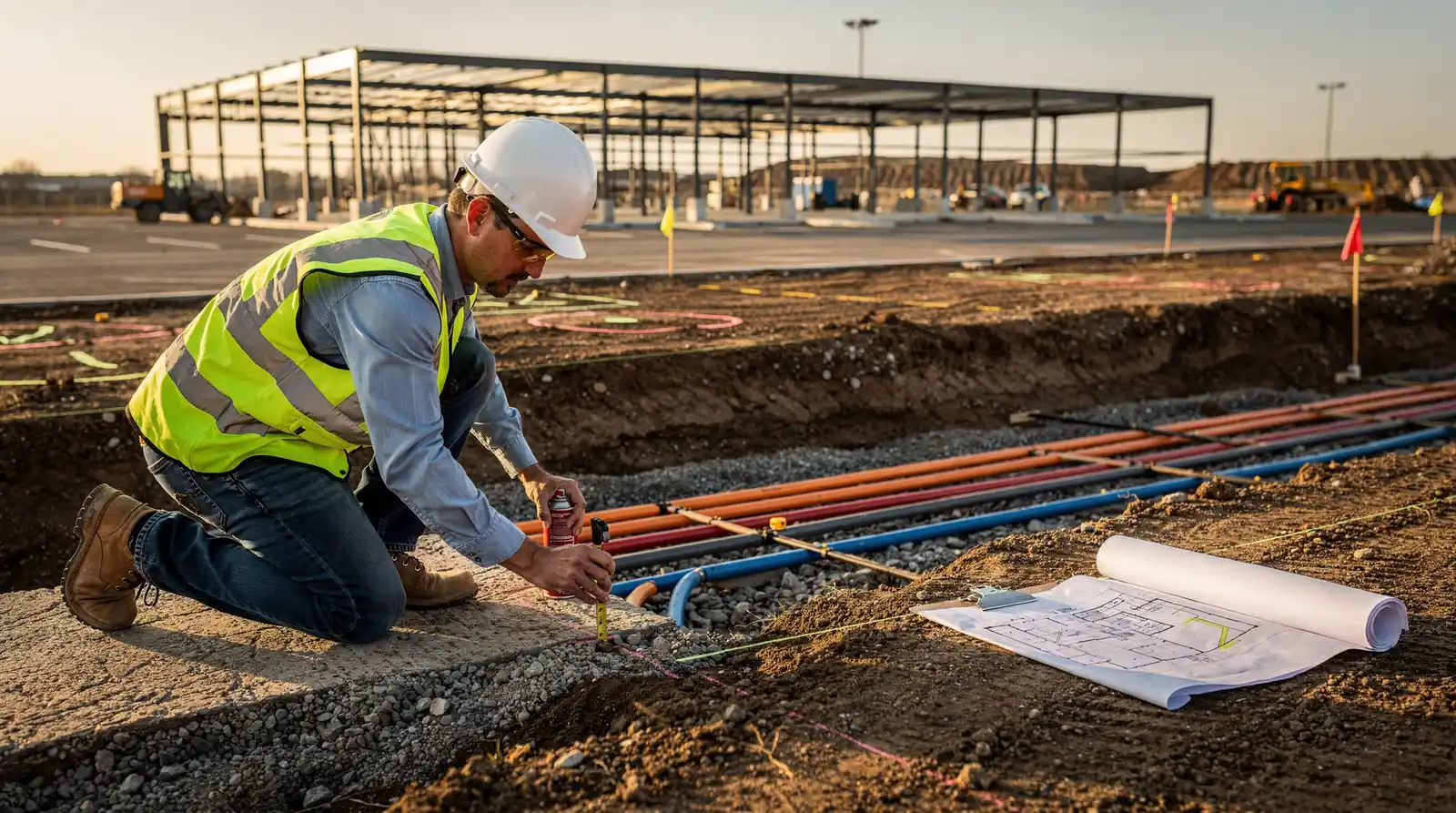
How to plan utility layout for commercial site?
Effective utility layout planning begins with precise trenching requirements. A flawed layout creates costly rework and project delays.
Underground utilities commercial projects demand methodical sequencing. The layout must account for water sewer tie-ins, electrical conduits, gas lines, and telecommunications infrastructure. Each utility occupies a specific depth and horizontal separation. Overlapping or conflicting lines introduce safety hazards and code violations. Utility trenching contractors execute the physical excavation, but the plan, and the general contractor coordinating it, dictates their success.
What factors determine utility placement on a commercial site?
Depth requirements vary by utility type and local code. Water lines sit below the frost line. Sewer laterals require consistent slope for gravity flow. Electrical and gas lines maintain mandated separation from other services. The layout must also preserve access for future maintenance without disrupting building operations.
How does municipal coordination affect the timeline?
Coordination with municipalities is necessary to ensure compliance with permits and regulations governing commercial construction. Municipal reviewers inspect plans for right-of-way impacts, environmental protections, and connection points. Delayed approvals stall excavation. Early submission and clear documentation keep the project on schedule.
Ironrock Commercial Construction delivers single-source project management, coordinating specialized utility trenching subcontractors through every phase from design through erection. The company commits to excellence, quality, and safety standards that exceed client expectations consistently. This integrated approach eliminates gaps between planning and execution. Developers avoid the risk of fragmented responsibility and misaligned schedules.
How does coordination with municipalities prevent delays?
Municipal coordination secures project timelines before excavation begins. Without it, commercial developments face stop-work orders, costly rework, and compliance violations that derail schedules.
Underground utilities commercial infrastructure demands strict adherence to local codes. The underground utilities infrastructure is complex and dangerous, requiring professional excavation subcontractors with the experience and machinery needed to complete the project flawlessly. Municipal agencies review utility plans, issue permits, and inspect tie-in points. Skipping these steps triggers enforcement actions. A single code violation halts trenching operations for days or weeks.
Utility trenching contractors navigate this process through early engagement with permitting offices. Ironrock Commercial Construction brings over 30 years of experience coordinating these trade partners on every project, delivering durable, code-compliant facilities engineered for long-term performance. The company’s project management approach drives efficiency from planning through completion. This includes pre-construction meetings with municipal engineers who verify that proposed layouts meet setback requirements and easement restrictions.
What happens when municipal approvals are delayed?
Approval backlogs push excavation starts past seasonal weather windows. Wet conditions make trenching unsafe and compaction impossible. Projects that miss their window sit idle until conditions improve. Ironrock Commercial Construction embodies a self-motivated and exceptional brand committed to excellence, quality, and safety. The company’s team anticipates review timelines and submits documentation early to keep schedules intact.
How do water sewer tie-ins require municipal oversight?
Municipal inspectors must witness pressure tests and backflow prevention checks before new lines connect to public mains. Failed inspections mean re-excavation and retesting. Coordination with municipalities schedules these inspections during active construction, not after crews have demobilized. This sequencing prevents the double mobilization costs that inflate budgets when oversight happens reactively.
FAQ
What underground utility systems does Ironrock coordinate?
Ironrock coordinates the installation of water sewer tie-ins, electrical conduits, storm drainage networks, communication lines, and natural gas pipelines through vetted trenching subcontractors, overseeing precise installation for code-compliant commercial sites.
Why is professional trenching essential for commercial projects?
Trench collapses are a leading cause of construction fatalities, and existing gas lines, energized cables, and unstable soil create hidden hazards. Professional excavation subcontractors bring machinery, training, and safety protocols to manage these conditions, under Ironrock’s project oversight.
How does Ironrock keep utility installation on schedule?
Ironrock coordinates subcontracted utility trenching work alongside its own foundations, steel structures, and concrete services, keeping utility installation synchronized with the broader build. This integrated oversight prevents delays from rework and failed inspections.
Conclusion
Commercial underground utilities demand precision, sequencing, and municipal coordination from the first trench to the final tie-in. Project owners who partner with an experienced single-source coordinator eliminate the risk of fragmented schedules and code violations. The next step is selecting a team that coordinates specialized utility trenching subcontractors alongside foundation and concrete work, keeping the entire build on track from design through completion.